
How a pump is hired
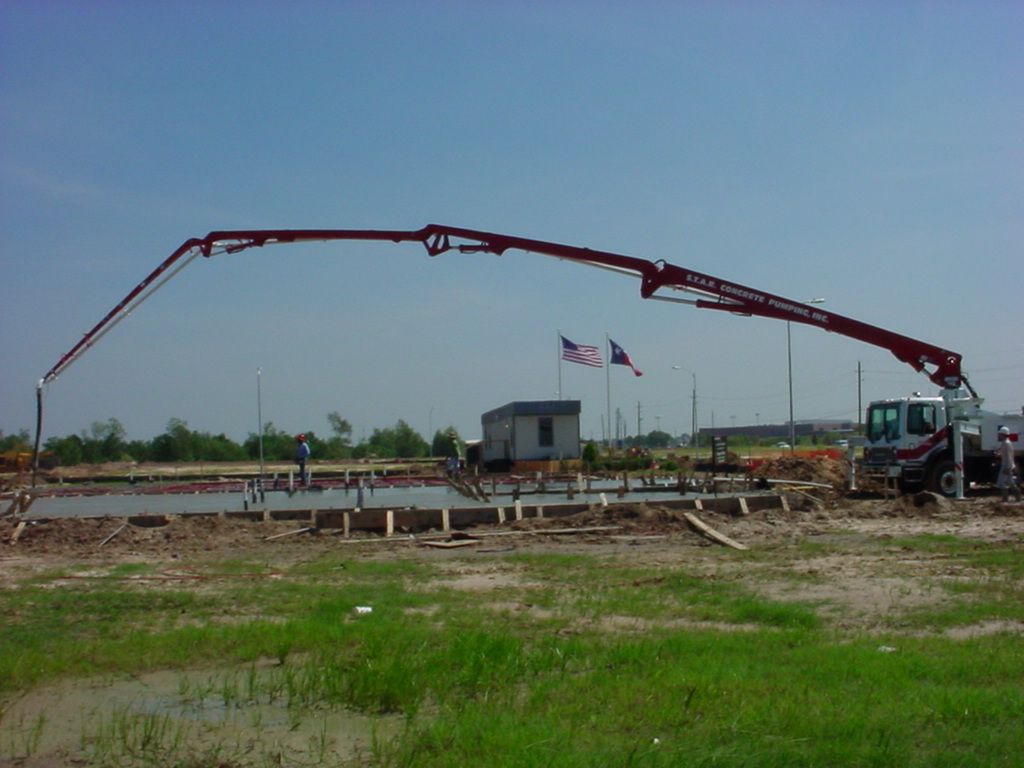
A concrete pump is booked by the pour, with the operator. You tell dispatch the day, the start time, the yards and the address. We send the boom that fits, with a S.T.A.R. operator who sets it up, runs it and cleans it out. You never take the keys.
The usual terms in this trade are an hourly minimum, a yardage charge, line charges when pipe or hose runs off the boom, and travel when the job is far from a base. Dispatch quotes the pour as one number before you book it.
There is no price list. Two slabs with the same yards can need different booms, different hours and different line. The quote is for your pour, not an average.
What you supply
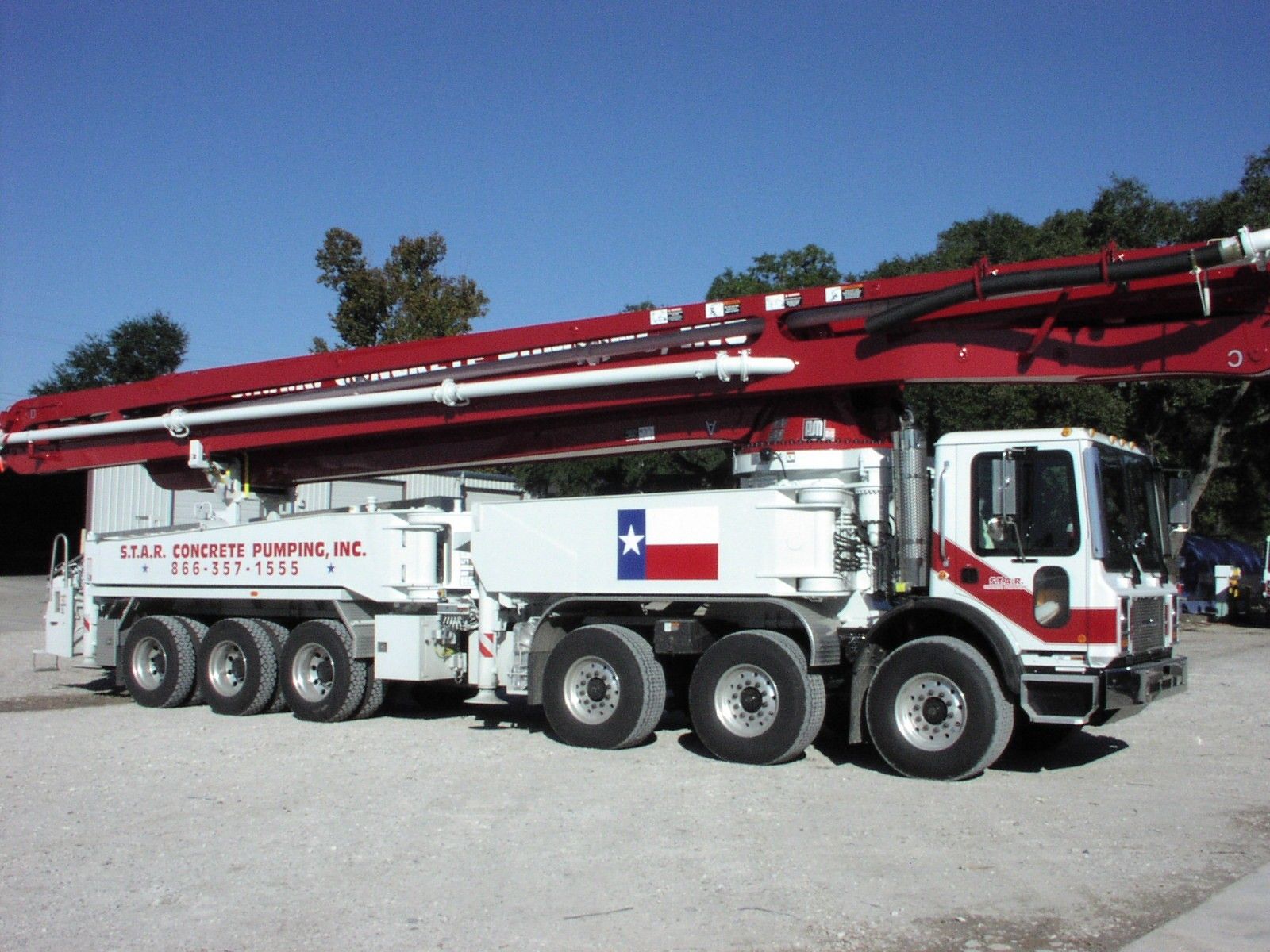
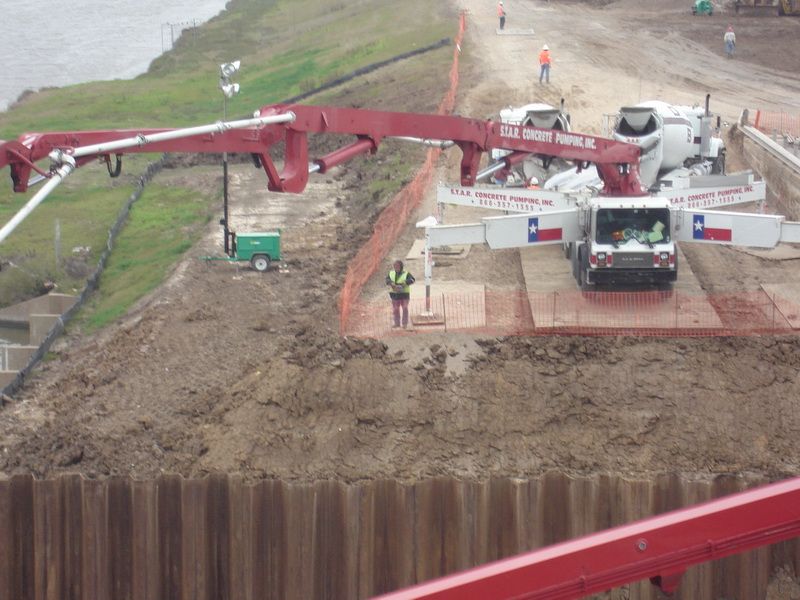
- Access. A route the truck can drive and a place to set up with the outriggers fully out. A 36 to 47 meter unit wants about 30 feet of width. The bigger booms want 40. Tell dispatch about gates, overhead lines and tight turns.
- Ground. Solid ground under the outrigger pads. Soft ground gets cribbing or mats, and we bring them when you tell us the ground is soft.
- The mix talk with the plant. A pumpable mix with the right slump and aggregate for the line. Tell your ready mix plant the concrete is being pumped and what boom and line are on it. Dispatch will talk to the plant with you if that helps.
- Washout. A place on site to wash out the hopper and the line at the end of the pour. A washout pit or a washout container. We do not wash out in the street.
- Your crew at the hose. We run the pump. Your finishers place the concrete. The operator and your hose man work the pour together.
Line pump or boom pump for a small job
A boom pump puts the concrete where you want it from where the truck parks, up to 190 feet out on the longest boom. It is the answer for slabs, tilt wall, mats, decks and anything with yards behind it.
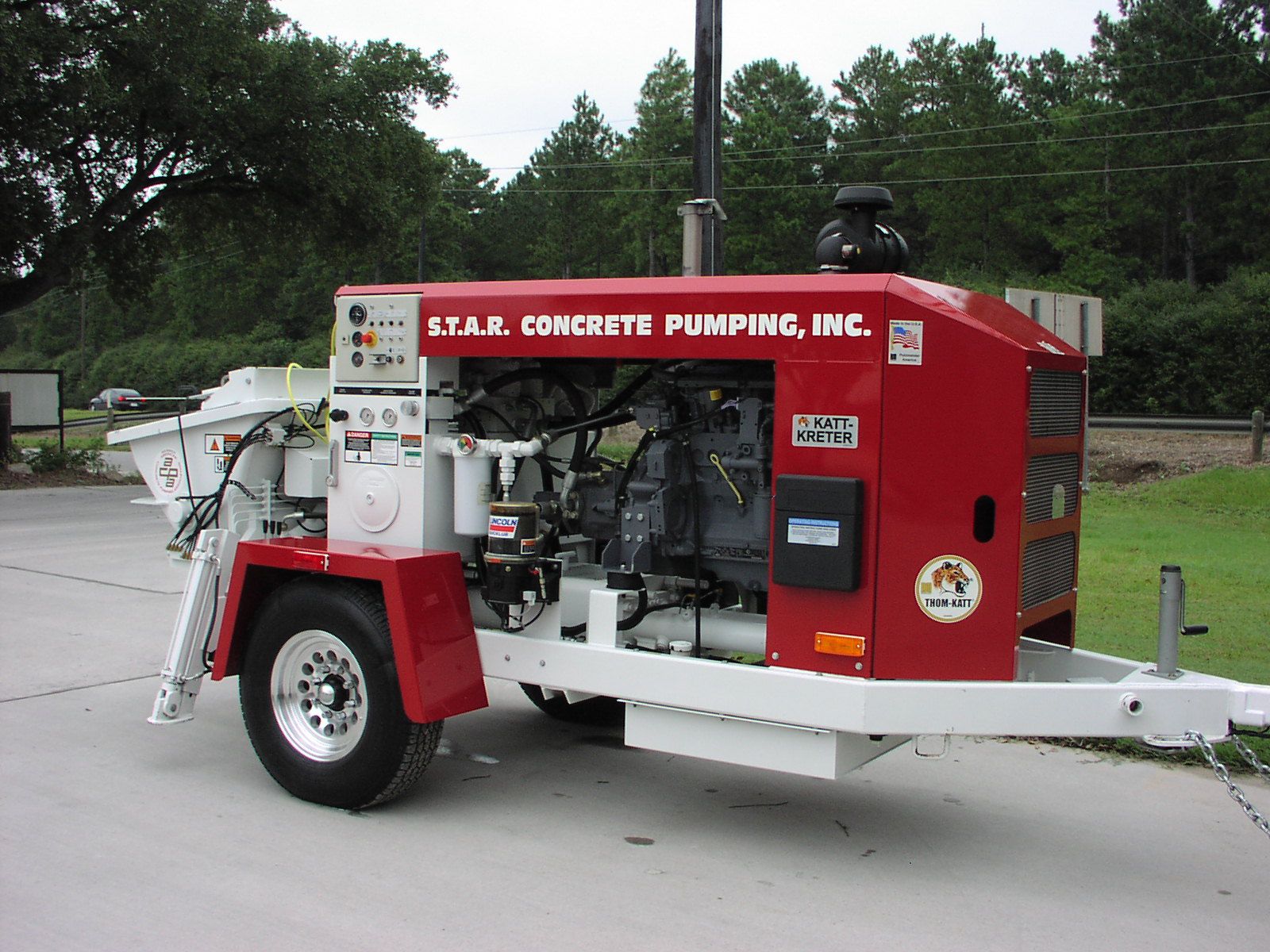
A line pump is a trailer or truck unit that pushes concrete through hose and pipe laid on the ground. It fits interiors, backyards, basements, tight access and long runs where no boom can set up. It moves fewer yards an hour and takes more labor to lay and move the hose.
For a small commercial pour, the honest rule: if the truck can park within reach of the pour, a boom pump is usually simpler and faster, even on a small slab. If the pour is inside a building, behind a house or down a hill, it is a line pump. Dispatch will tell you which one on the call.
We do very little residential. For a driveway or a pool deck there are good local line pump outfits, and we are glad to point you to one.
Where
Greater Houston from the Tomball yard: Katy, Cypress, The Woodlands, Conroe, Spring, Baytown, Pasadena, La Porte, Sugar Land and Galveston County. More on the Houston page. Austin contractors start on the Austin page.
Questions about hiring a pump
How much does it cost to rent a concrete pump in Houston?
Can I rent the pump without an operator?
What are the minimums?
How soon can you be there?
Need a pump and an operator?
Tell dispatch the pour, the yards and the address. You get one number for that pour and the time the boom arrives.
Or call dispatch, (281) 357-1555.